Games have been an inseparable part of human culture since the dawn of civilization. From the ancient board games carved into stone to the immersive virtual realities of today, games have evolved into one of the most powerful and unifying forms of entertainment. They bring joy, challenge, connection, and learning to people across the globe. In this blog, we will explore the vast universe of games—how they began, how they evolved, and how they continue to shape human creativity, technology, and society.
The Origins of Games
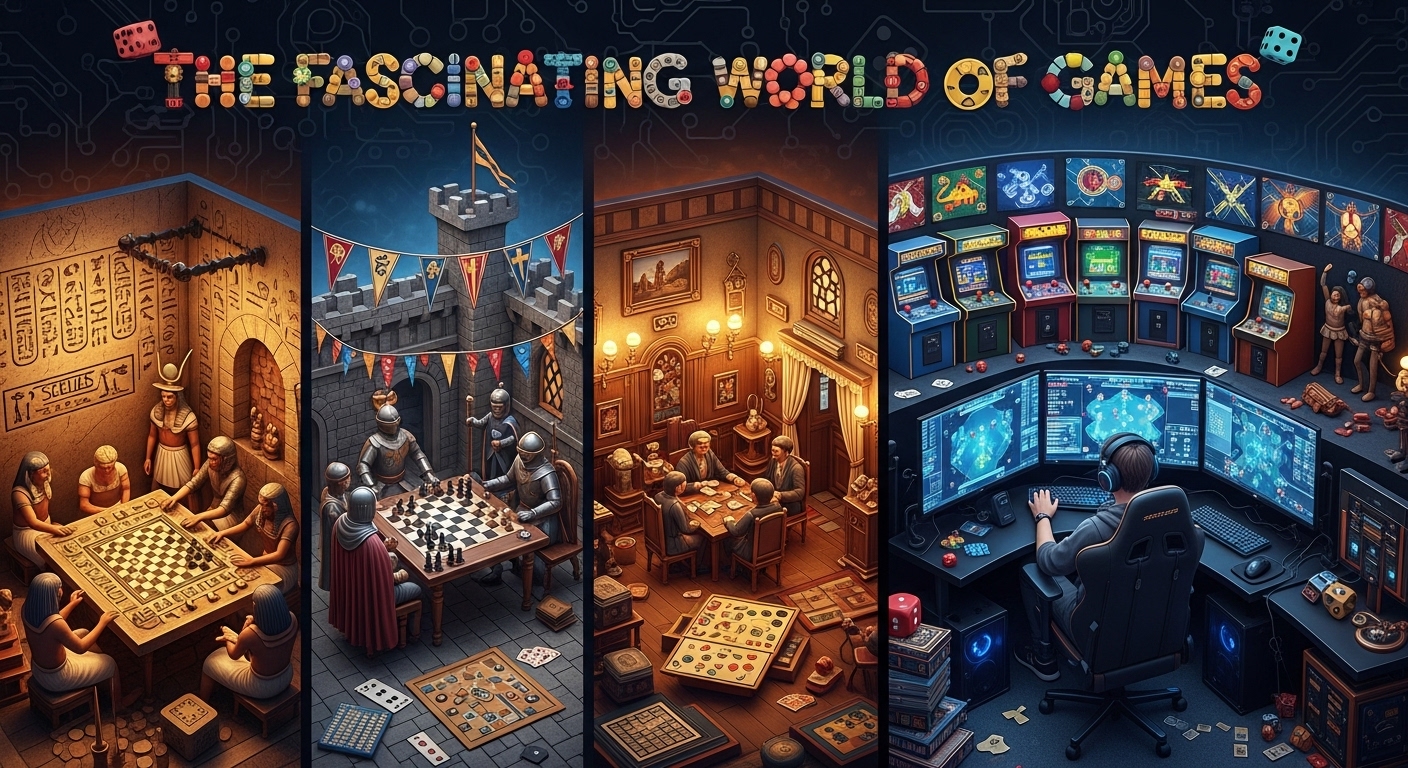
The history of games stretches back thousands of years. Archaeological evidence shows that games have existed in nearly every ancient civilization. One of the oldest known games is Senet, played in ancient Egypt around 3100 BCE. This board game, consisting of a grid and small tokens, symbolized the journey of the soul through the afterlife. Similarly, the Royal Game of Ur, discovered in Mesopotamia, offered early forms of competitive play that laid the groundwork for modern board gaming.
In ancient China, Go emerged as one of the most strategic games in history. Its simple black and white stones represented the balance between two opposing forces. The game’s depth of strategy and elegance made it not only an intellectual pursuit but also a spiritual one. Meanwhile, in India, Chaturanga evolved into what we now know as chess—a timeless game that continues to test the minds of millions.
Games were more than just pastimes; they were reflections of culture, philosophy, and human curiosity. They served as tools for social bonding, strategic thinking, and even moral lessons.
The Rise of Traditional and Physical Games
As societies developed, games took on new forms. Physical games emerged, combining movement, strength, and skill. The ancient Greeks introduced athletic competitions like wrestling, javelin throw, and running, which became the foundation of the modern Olympic Games. These competitions celebrated not only physical prowess but also discipline and honor.
In medieval Europe, games like jousting and archery tournaments gained popularity among knights and nobles. These contests of skill and courage symbolized the values of chivalry and bravery. Meanwhile, folk games like tag, hide-and-seek, and ball games entertained common people, fostering a sense of community and joy.
As trade routes expanded, so did the exchange of games. Playing cards, for example, spread from Asia to Europe, inspiring countless new games of chance and strategy. Dice games, which had been around since ancient times, continued to evolve into modern gambling and tabletop gaming.
The Birth of Modern Board Games
The 19th century marked a golden era for board games. Industrialization and urbanization gave families more leisure time, and games became a staple of household entertainment. Titles like Monopoly, Scrabble, and Clue emerged, blending competition with creativity.
Monopoly, for example, was inspired by economic concepts and real estate trading. It taught generations about financial strategy, negotiation, and risk-taking. Scrabble turned language into a playground of letters and points, encouraging vocabulary and critical thinking. Board games became educational tools, social experiences, and sources of endless laughter.
By the 20th century, the board game industry had expanded globally. New titles emerged that catered to all interests—strategy games like Risk, cooperative games like Pandemic, and fantasy adventures like Dungeons & Dragons. These games demonstrated the endless possibilities of imagination and human ingenuity.
The Dawn of Digital Gaming
The 20th century also witnessed a revolution that would redefine gaming forever—the birth of digital and electronic games. The earliest computer games were simple, often created by scientists and engineers experimenting with programming. One of the first known digital games, Spacewar! (1962), featured two players controlling spaceships in a simulated space battle.
The real explosion came with the arrival of arcade games in the 1970s. Titles like Pong, Space Invaders, and Pac-Man turned gaming into a social phenomenon. Crowds gathered in arcades to compete for high scores, and gaming became a shared cultural experience.
The introduction of home consoles like the Atari 2600, Nintendo Entertainment System (NES), and Sega Genesis brought the arcade experience into living rooms. Suddenly, gaming wasn’t just a niche activity—it became a part of everyday life.
The Evolution of Video Games
The 1990s marked an era of incredible innovation in gaming. Graphics became more detailed, stories became deeper, and technology advanced rapidly. 3D graphics, introduced by games like Super Mario 64 and Tomb Raider, allowed players to explore vast worlds in new dimensions.
Game genres began to diversify. Role-playing games (RPGs) such as Final Fantasy and The Legend of Zelda immersed players in epic stories and emotional journeys. First-person shooters like Doom and Quake introduced fast-paced action and competitive online play. Strategy games like Age of Empires and StarCraft allowed players to build empires and test their tactical skills against others around the world.
Multiplayer experiences flourished as the internet became more accessible. Online gaming communities formed, and competition reached new heights. The rise of Massively Multiplayer Online Role-Playing Games (MMORPGs) like World of Warcraft created virtual worlds where millions could interact, trade, and collaborate in real-time.
The Artistic Side of Gaming
While games were once seen purely as entertainment, they gradually evolved into a legitimate form of art. Developers began to focus on storytelling, music, and visual design to create emotionally rich experiences.
Games like Journey, The Last of Us, and Shadow of the Colossus are often cited as masterpieces of interactive storytelling. They evoke deep emotions through visuals, soundtracks, and character development. Unlike films or books, games allow players to participate in the story, creating a powerful sense of connection.
Independent (indie) game developers also contributed to the artistic renaissance of gaming. With fewer financial constraints, indie studios took creative risks, producing unique and personal projects. Games like Celeste, Hollow Knight, and Undertale proved that a small team with passion could rival the impact of large studios.
The Psychology and Benefits of Gaming
Beyond entertainment, games have profound psychological and social benefits. They stimulate the brain, improve coordination, and enhance problem-solving skills. Strategy and puzzle games encourage critical thinking, while simulation and management games teach resource planning and decision-making.
Games can also foster teamwork and communication. Multiplayer experiences require players to coordinate, share strategies, and adapt to dynamic challenges. This collaborative aspect strengthens social bonds and promotes empathy and understanding.
In education, gamification has become a popular tool. Teachers use game mechanics—such as rewards, levels, and challenges—to make learning engaging. Educational games help students grasp complex subjects in interactive and enjoyable ways.
Even in healthcare, games play a role. Virtual reality (VR) games assist in rehabilitation therapy, helping patients regain motor skills through guided exercises. Some games are designed to improve mental health by reducing stress and anxiety through relaxation and mindfulness activities.
The Rise of Esports and Competitive Gaming
In recent years, competitive gaming—or esports—has transformed into a billion-dollar industry. Professional players, teams, and tournaments attract audiences that rival traditional sports. Games like League of Legends, Counter-Strike, and Dota 2 have global fan bases, with championship events drawing millions of viewers.
Esports athletes train rigorously, just like traditional sports players. They focus on reflexes, strategy, communication, and mental endurance. The rise of streaming platforms has also created new opportunities for gamers to build careers as content creators and influencers.
The recognition of esports as a legitimate sport continues to grow. Universities offer scholarships for esports players, and international tournaments are hosted in massive arenas. The sense of community, rivalry, and dedication mirrors that of any professional athletic discipline.
The Influence of Technology on Modern Gaming
Technology continues to reshape the gaming landscape. The rise of powerful consoles, high-speed internet, and cloud gaming has made games more accessible than ever. Players can stream high-quality games without expensive hardware, breaking down barriers between developers and audiences.
Virtual Reality (VR) and Augmented Reality (AR) have opened new dimensions of play. With VR headsets, players can step into fully immersive worlds—fighting dragons, exploring galaxies, or simply painting in 3D space. AR, on the other hand, blends the real and digital worlds, as seen in games like Pokémon Go.
Artificial Intelligence (AI) has also revolutionized gaming. Modern AI systems create dynamic environments where characters learn, adapt, and respond intelligently. This makes gameplay more challenging, realistic, and engaging.
The Future of Gaming
The future of gaming promises even greater innovation. With advancements in quantum computing, neural interfaces, and cloud-based platforms, games may soon transcend traditional screens. Imagine controlling a game with your thoughts or exploring lifelike virtual worlds indistinguishable from reality.
The concept of the metaverse—a shared digital universe—continues to gain traction. In this interconnected virtual world, players can live, work, and socialize. Games will no longer be just about play; they will become integral parts of digital existence.
Developers are also focusing on inclusivity and accessibility. Games are being designed to welcome players of all backgrounds, abilities, and experiences. This ensures that everyone, regardless of skill or limitation, can enjoy the magic of play.
Sustainability is another growing focus. With the environmental impact of hardware production and energy use, companies are exploring eco-friendly solutions for the gaming industry’s future.
Games as a Reflection of Humanity
Ultimately, games are more than pixels and pieces—they are mirrors of human creativity, emotion, and aspiration. Every game, from a simple board game to a massive online world, tells a story about who we are. Games challenge us to think, to imagine, to connect, and to grow.
They remind us that play is not just for children; it’s a fundamental human need. Through games, we express our curiosity, our competitiveness, and our desire to create meaning in the world around us.
Conclusion
From the ancient sands of Egypt to the glowing screens of the 21st century, games have been constant companions of human evolution. They have adapted with technology, culture, and imagination—bridging generations and transcending boundaries.
The world of games is vast and ever-changing, yet its essence remains timeless: the joy of discovery, the thrill of challenge, and the connection between players. Whether it’s a chessboard, a football field, or a virtual realm, games continue to celebrate the spirit of play that defines humanity itself.