Gaming has transitioned from a simple pastime to a global phenomenon, affecting millions of people worldwide and shaping cultures, economies, and even social norms. What once started as a niche activity is now one of the largest and most profitable industries in the world. From the early days of arcade cabinets and home consoles to the rise of virtual reality and cloud gaming, gaming has gone through a significant transformation. This blog post will delve into the history, evolution, trends, and future of gaming, shedding light on how gaming has become the cultural and economic force it is today.
The Humble Beginnings: The 1950s to 1980s
The Birth of Video Games
While video games today are incredibly complex and immersive, they began their journey as simple experiments in programming and technology. The very first video game, Tennis for Two, was created by physicist William Higinbotham in 1958. It was a simple game displayed on an oscilloscope, where two players controlled paddles to hit a ball back and forth. It wasn’t until 1972 that video games began to see commercial success with the release of Pong by Atari. Pong was a simple simulation of table tennis, but its impact was profound. It marked the beginning of the video game era and set the stage for the industry’s massive growth.
The success of Pong led to the opening of arcade game halls where players could insert coins to play video games. These arcades became cultural hubs in the 1970s and early 1980s. Classic games like Space Invaders, Pac-Man, and Donkey Kong became iconic, and they laid the foundation for the gaming culture that would grow over the next several decades.
The Rise of Home Consoles
In the late 1970s and early 1980s, video games began to move from arcades to the home console market. The Atari 2600, released in 1977, allowed players to enjoy arcade-like games at home. This marked the beginning of the home gaming revolution. However, the industry faced significant challenges during the early 1980s due to an oversaturation of the market, resulting in the video game crash of 1983. Numerous poorly designed and low-quality games flooded the market, leading to a temporary decline in interest.
The industry was revitalized in 1985 when Nintendo introduced the Nintendo Entertainment System (NES). With games like Super Mario Bros. and The Legend of Zelda, Nintendo not only brought quality back to the forefront of gaming but also set new standards for what video games could be. The NES’s success helped restore faith in the industry and led to a period of innovation that would shape the future of gaming for years to come.
The Golden Age of 3D Gaming: The 1990s to Early 2000s
The Leap into 3D Graphics
The 1990s was a period of significant technological advancement for gaming. One of the most important developments was the transition from 2D to 3D graphics. This shift was primarily driven by the release of consoles like the Sony PlayStation (1994), the Nintendo 64 (1996), and the Sega Saturn (1995). These systems pushed the boundaries of what was possible in terms of graphical fidelity and immersive gameplay.
Games like Super Mario 64, Final Fantasy VII, and Gran Turismo showcased the potential of 3D environments, offering players a deeper level of immersion. The open-world gameplay of Super Mario 64, for example, allowed players to explore vast, 3D environments, while Final Fantasy VII introduced gamers to cinematic storytelling and expansive worlds. These games were not just about gameplay mechanics; they were also about telling stories in new and exciting ways.
The Growth of Online Multiplayer
As 3D graphics revolutionized the visual and interactive aspects of gaming, the next major advancement came in the form of online multiplayer. The 1990s saw the rise of the internet, and with it, online gaming began to take hold. Titles like Warcraft and StarCraft laid the foundation for competitive online gaming, while Quake and Unreal Tournament brought the first-person shooter genre to the online arena.
However, it wasn’t until the early 2000s that online gaming became mainstream, largely due to the launch of Xbox Live in 2002. This online service allowed Xbox owners to connect with players around the world and engage in real-time multiplayer matches. One of the most influential games to benefit from this service was Halo 2 (2004), which set a new standard for online multiplayer gaming. The success of Halo 2 and the growth of Xbox Live helped to solidify online gaming as a staple of modern gaming culture.
The Rise of Mobile and Social Gaming: The 2000s to 2010s
The Mobile Revolution
In the mid-2000s, gaming underwent another significant shift with the rise of mobile gaming. The introduction of smartphones, especially the iPhone in 2007, created a new platform for gaming. Unlike consoles and PCs, smartphones were portable and accessible to nearly everyone. The release of the App Store in 2008 provided a platform for developers to release games to a global audience with relative ease.
Mobile games like Angry Birds (2009), Temple Run (2011), and Candy Crush Saga (2012) became global phenomena. These games were designed to be simple, easy to play, and highly addictive, appealing to a broad range of people, including those who had never considered themselves gamers. Mobile gaming created an entirely new demographic for the gaming industry—casual gamers who could play on the go, whether they were commuting or waiting in line.
The rise of mobile gaming also brought with it new business models, such as free-to-play games and in-app purchases. Games like Clash of Clans (2012) and Fortnite (2017) popularized microtransactions, allowing players to access games for free while offering the option to purchase in-game items or upgrades. This model proved to be highly profitable, and it has since become a dominant way for developers to monetize their games.
Social Gaming and the Role of Streaming
As mobile gaming grew, so did social gaming. Platforms like Facebook introduced social features that allowed users to play games with their friends. Games like FarmVille and Words with Friends made social gaming a widespread activity, encouraging users to interact with friends and family in a fun and engaging way.
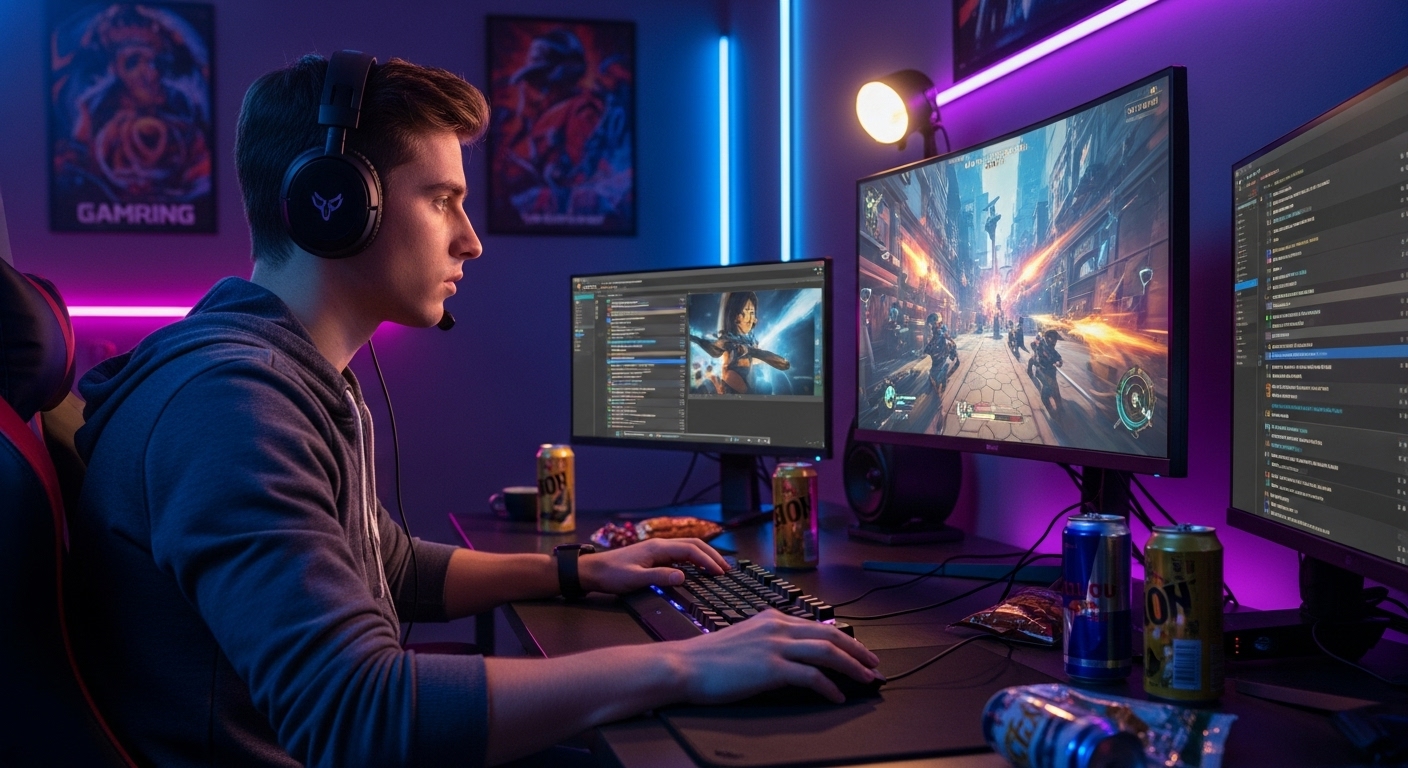
Simultaneously, streaming platforms like Twitch and YouTube Gaming began to reshape the gaming landscape. Twitch, in particular, became the go-to platform for gamers to broadcast their gameplay to a live audience. This shift allowed gaming to become a form of entertainment in its own right, with players gaining massive followings and even monetizing their content. Streamers like Ninja, PewDiePie, and Pokimane became household names, turning gaming into a legitimate career for many.
The Current State of Gaming: 2020s
The Rise of Esports
Esports has become a cornerstone of the modern gaming landscape, evolving into a multi-billion-dollar industry. Competitive gaming, once seen as a niche interest, now attracts millions of viewers, professional players, and sponsors. Titles like League of Legends, Dota 2, Fortnite, and Call of Duty have become the focus of major esports tournaments, with prize pools often reaching tens of millions of dollars.
Esports has also led to the development of a professional ecosystem, with dedicated teams, coaches, analysts, and commentators. Universities and colleges now offer esports scholarships, and large corporations have invested heavily in esports organizations and events. The growth of esports has brought gaming into the mainstream, turning it into a legitimate spectator sport with a dedicated fanbase.
Virtual Reality (VR) and Augmented Reality (AR)
Virtual reality (VR) and augmented reality (AR) are among the most exciting developments in gaming today. VR offers players a fully immersive gaming experience, allowing them to enter digital worlds and interact with them as if they were physically present. The release of the Oculus Rift, PlayStation VR, and other VR headsets has allowed developers to create games that push the boundaries of immersion. Titles like Half-Life: Alyx (2020) and Beat Saber (2018) have shown the potential of VR, offering experiences that were previously unimaginable in traditional gaming.
AR, on the other hand, overlays digital content onto the real world, allowing players to interact with both physical and virtual elements. Pokémon GO (2016) became one of the most popular AR games, encouraging players to explore the real world while capturing virtual creatures. As AR technology continues to improve, we can expect more games that integrate the virtual and real worlds in exciting and innovative ways.
Cloud Gaming and the End of Hardware?
Cloud gaming is another rapidly growing trend that has the potential to change the entire gaming landscape. Services like Google Stadia, Xbox Cloud Gaming, and NVIDIA GeForce Now allow players to stream games directly from the cloud, eliminating the need for expensive gaming hardware. This shift toward cloud gaming could make high-quality gaming accessible to anyone with a stable internet connection, regardless of their device’s specifications. It could also eliminate the need for players to constantly upgrade their hardware, as games would run on powerful servers in data centers.
However, cloud gaming faces challenges, including issues with latency and the need for high-speed internet connections. While cloud gaming has made significant strides, it may take a few more years before it becomes the dominant platform for gaming. Nonetheless, the potential for cloud gaming to democratize gaming by making it more accessible is immense.
The Future of Gaming: What Lies Ahead?
As technology continues to advance, the future of gaming is filled with possibilities. In addition to the trends already mentioned, we can expect the continued evolution of AI in gaming, more realistic graphics and physics, and even deeper forms of interactivity with players. Game design will become more intricate, with narratives that blur the lines between reality and fiction.
One significant development to look forward to is the potential for the integration of AI-driven characters and worlds. Games like The Elder Scrolls V: Skyrim already feature complex NPCs, but future games could take this to the next level, with AI creating dynamic, ever-changing worlds that respond to the player’s actions in real-time.
Furthermore, the concept of the Metaverse—an interconnected virtual universe where players can live, work, and socialize in a digital world—could become a key feature of the future of gaming. Companies like Meta (formerly Facebook) are already investing heavily in this vision, and it’s possible that the next generation of games will offer fully immersive digital worlds where players can explore, create, and collaborate in unprecedented ways.
Conclusion: The Endless Possibilities of Gaming
From its humble beginnings in arcades and home consoles to the rise of virtual worlds and cloud gaming, the journey of video games has been nothing short of extraordinary. As technology continues to advance, the possibilities for gaming are virtually limitless. The future of gaming is bright, and whether it’s through new innovations like VR, AR, or AI, gaming will continue to evolve and captivate audiences around the world.
Gaming is no longer just a hobby or entertainment—it’s a cultural force that shapes the way we interact with the world, connect with others, and even think about reality itself. With the continued growth of esports, streaming, and new technologies, gaming will remain at the forefront of innovation, offering experiences that are more immersive, social, and exciting than ever before. The journey of gaming is far from over, and as we look toward the future, there’s no telling what new adventures await.