
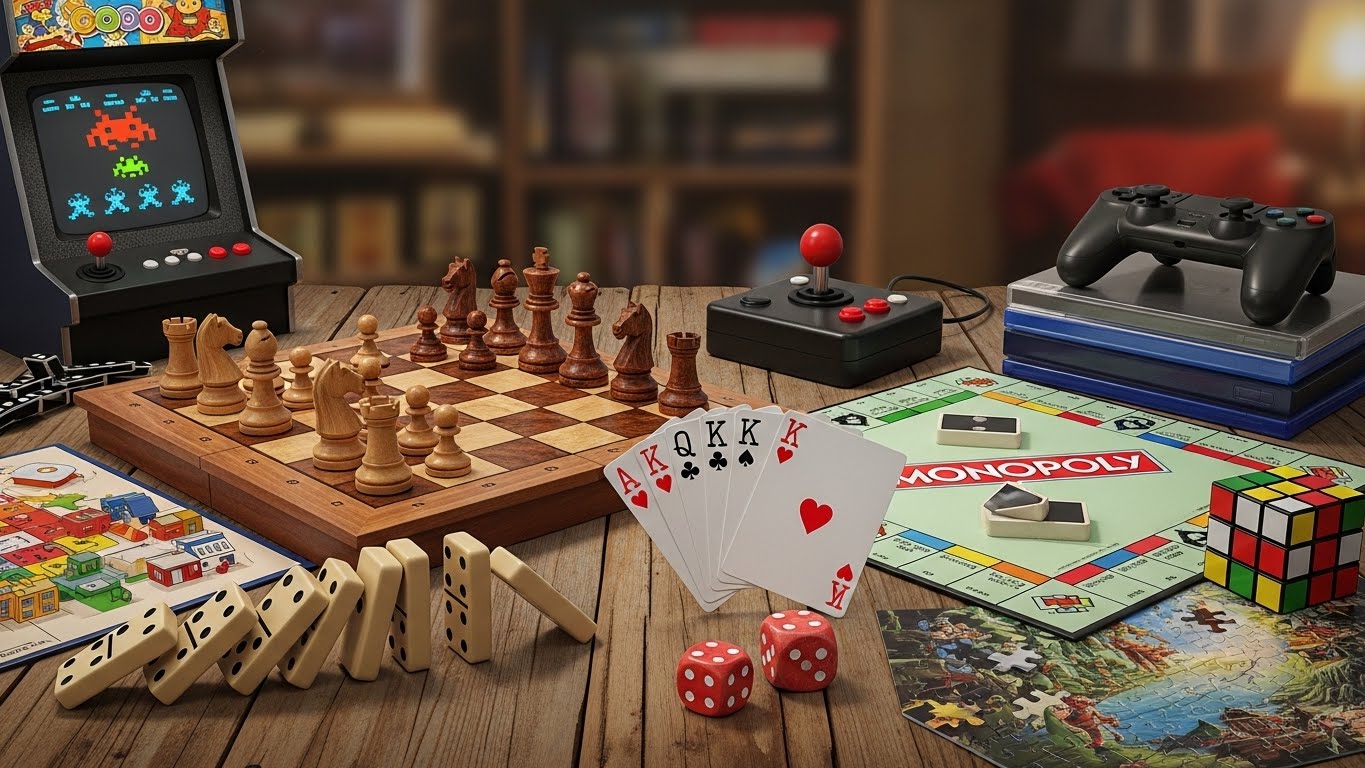
Gaming has evolved far beyond the simple pastime it once was. From the earliest days of board games and card games to the sophisticated virtual worlds of today, games have always been more than entertainment. They are a reflection of human creativity, culture, and innovation. In this article, we will explore the fascinating world of games, the impact they have on society, the technology behind them, and why they continue to captivate millions worldwide.
The Origins of Gaming
Games have been a part of human culture for thousands of years. Archaeologists have discovered ancient board games in Egypt, Mesopotamia, and China, dating back over 5,000 years. One of the earliest known games, Senet, played in ancient Egypt, is a testament to the human desire for strategy, competition, and recreation. Similarly, the ancient Chinese game of Go, which involves placing stones on a grid to control territory, remains popular even today.
These early games were not just for fun—they were tools for social interaction, education, and even spiritual reflection. They often mirrored societal hierarchies and cultural beliefs, giving insight into the values of ancient civilizations.
The Rise of Video Games
The 20th century brought a monumental shift in gaming with the invention of video games. Starting with simple arcade games like Pong in the 1970s, the gaming industry quickly grew into a global phenomenon. Video games introduced interactive storytelling, complex graphics, and immersive gameplay that could transport players into entirely new worlds.
The 1980s and 1990s saw the rise of home gaming consoles, making video games more accessible than ever. Iconic titles emerged during this period, shaping the industry and influencing generations of players. Games such as Super Mario Bros, The Legend of Zelda, and Sonic the Hedgehog became cultural icons, bridging the gap between childhood entertainment and serious gaming.
The Psychology of Gaming
Why do games hold such a powerful appeal? Psychology provides some answers. Games stimulate the brain in ways that other forms of entertainment cannot. They offer rewards, challenges, and opportunities for mastery, all of which trigger the brain’s pleasure centers.
Video games, in particular, employ principles of motivation and learning. Players experience a sense of accomplishment when overcoming difficult levels, solving puzzles, or achieving high scores. Multiplayer games add another layer of engagement, fostering social interaction, teamwork, and competition. These psychological factors explain why games can be so addictive, immersive, and emotionally rewarding.
The Diversity of Modern Games
Today, gaming is more diverse than ever. It encompasses a wide range of genres, platforms, and experiences. Some of the most popular types of games include:
Action and Adventure Games
These games focus on fast-paced gameplay, requiring reflexes, strategy, and exploration. Players often embark on epic quests, battle enemies, and solve challenges. Games like Assassin’s Creed and Tomb Raider are classic examples that combine storytelling with thrilling action.
Role-Playing Games
Role-playing games, or RPGs, allow players to assume the identity of characters and immerse themselves in expansive fictional worlds. From medieval fantasies to futuristic landscapes, RPGs emphasize narrative depth, character development, and decision-making.
Simulation and Strategy Games
Simulation games replicate real-life activities or scenarios, such as city building, farming, or managing a business. Strategy games challenge players to think critically and plan ahead, often balancing resources and tactical decisions. Games like SimCity and Civilization have captivated players for decades.
Puzzle and Casual Games
Puzzle games test problem-solving skills, logical thinking, and pattern recognition. Casual games are easy to pick up and play, making them ideal for short gaming sessions. Titles like Candy Crush and Sudoku exemplify how simple mechanics can provide endless entertainment.
Multiplayer Online Games
Massively multiplayer online games (MMOs) allow thousands of players to interact in persistent virtual worlds. These games emphasize social interaction, cooperation, and competition. World of Warcraft and Fortnite are prime examples that have cultivated passionate global communities.
The Technology Behind Games
The rapid advancement of technology has been a driving force behind the evolution of games. Graphics engines, artificial intelligence, and immersive sound design have transformed gaming from a simple pastime into a multi-sensory experience. Modern games feature realistic physics, lifelike characters, and expansive open worlds that push the boundaries of imagination.
Virtual reality (VR) and augmented reality (AR) have introduced entirely new ways to play. VR immerses players in fully interactive 3D environments, while AR overlays game elements onto the real world, creating a hybrid experience. These technologies are not only shaping entertainment but also influencing education, training, and therapy.
The Cultural Impact of Gaming
Games are more than entertainment; they are a cultural phenomenon. Gaming communities have grown into social networks where players connect, collaborate, and share experiences. Esports, or competitive gaming, has transformed gaming into a spectator sport, with professional players, tournaments, and massive prize pools.
Moreover, games influence other forms of media. Storytelling techniques from games are now used in films, books, and interactive experiences. Cosplay, fan art, and streaming have turned gaming into a creative outlet, allowing players to express their passion and creativity.
Games and Education
Educational games have proven to be effective tools for learning. Gamification—the integration of game mechanics into educational contexts—engages students, enhances motivation, and reinforces knowledge. Subjects ranging from mathematics to history can be taught through interactive games, making learning both fun and effective.
Simulation games also provide practical training in fields like medicine, aviation, and engineering. By replicating real-world scenarios, these games allow learners to practice skills in a risk-free environment, improving performance and confidence.
The Social Dimension of Gaming
Gaming is inherently social. Multiplayer games, online communities, and cooperative experiences foster collaboration and teamwork. Friendships are formed across borders, and players often develop strong bonds through shared challenges and achievements.
Furthermore, games can raise awareness of social issues and promote empathy. Story-driven games explore topics such as mental health, inequality, and environmental conservation, encouraging players to reflect on real-world challenges.
The Future of Gaming
The future of gaming is full of possibilities. Emerging technologies like cloud gaming, artificial intelligence, and procedural generation are shaping new experiences. Cloud gaming allows players to access high-quality games without expensive hardware, making gaming more inclusive and accessible. AI-driven games adapt to player behavior, offering personalized experiences that evolve in real-time.
The integration of gaming into everyday life is also expanding. Games are being used for fitness, mental health, social connection, and even professional development. The line between gaming and reality continues to blur, opening up new opportunities for creativity, learning, and entertainment.
Challenges in the Gaming Industry
Despite its growth and popularity, the gaming industry faces challenges. Issues such as addiction, cyberbullying, and the portrayal of violence in games remain concerns for parents, educators, and policymakers. Ethical considerations surrounding data privacy, loot boxes, and monetization models are also topics of debate.
Developers are increasingly focused on creating inclusive, safe, and responsible gaming experiences. Diversity in characters, narratives, and development teams ensures that games reflect the rich tapestry of human experience.
Conclusion
Games are far more than a simple pastime—they are a mirror of human creativity, technology, and culture. From ancient board games to modern virtual worlds, they engage our minds, challenge our skills, and connect us across the globe. As technology continues to evolve, games will remain a powerful medium for entertainment, education, and social interaction.
The world of gaming is ever-expanding, offering endless possibilities for exploration, imagination, and connection. Whether you are a casual player, a competitive gamer, or someone curious about the cultural impact of games, one thing is certain: the journey of gaming is just beginning, and its potential knows no bounds.