Introduction: The Universal Language of Games
Games have been part of human culture since the beginning of civilization. From the earliest board games carved into stone to the digital spectacles we experience today, games have always reflected our desire to compete, cooperate, and create. They are not just entertainment—they are communication, challenge, and culture combined.
Every generation finds new ways to play. What started as ancient pastimes like chess and dice has evolved into esports arenas, sprawling virtual worlds, and mobile games that fit in our pockets. The world of games continues to grow, adapting to technology and the imagination of those who design and play them.
This blog explores the vast universe of games—where they came from, how they’ve evolved, and what makes them such a powerful part of human life.
The Ancient Origins of Play
Before consoles and computers, there were stones, sticks, and imagination. Ancient people played games for fun, ritual, and even survival. The earliest known game, Senet, dates back over 5,000 years to ancient Egypt. It was more than just entertainment—it represented the journey to the afterlife.
In China, Go emerged as a game of deep strategy, one still played today by millions around the world. The Greeks had knucklebones, the Romans dice, and the Mayans ball games tied to religion and fate. These early games show how deeply play is rooted in human nature.
Even in prehistoric times, play served a purpose. It helped develop skills, build social bonds, and teach problem-solving. Whether through hunting simulations, competitions of strength, or storytelling games, people have always sought joy and challenge through play.
The Rise of Board and Tabletop Games
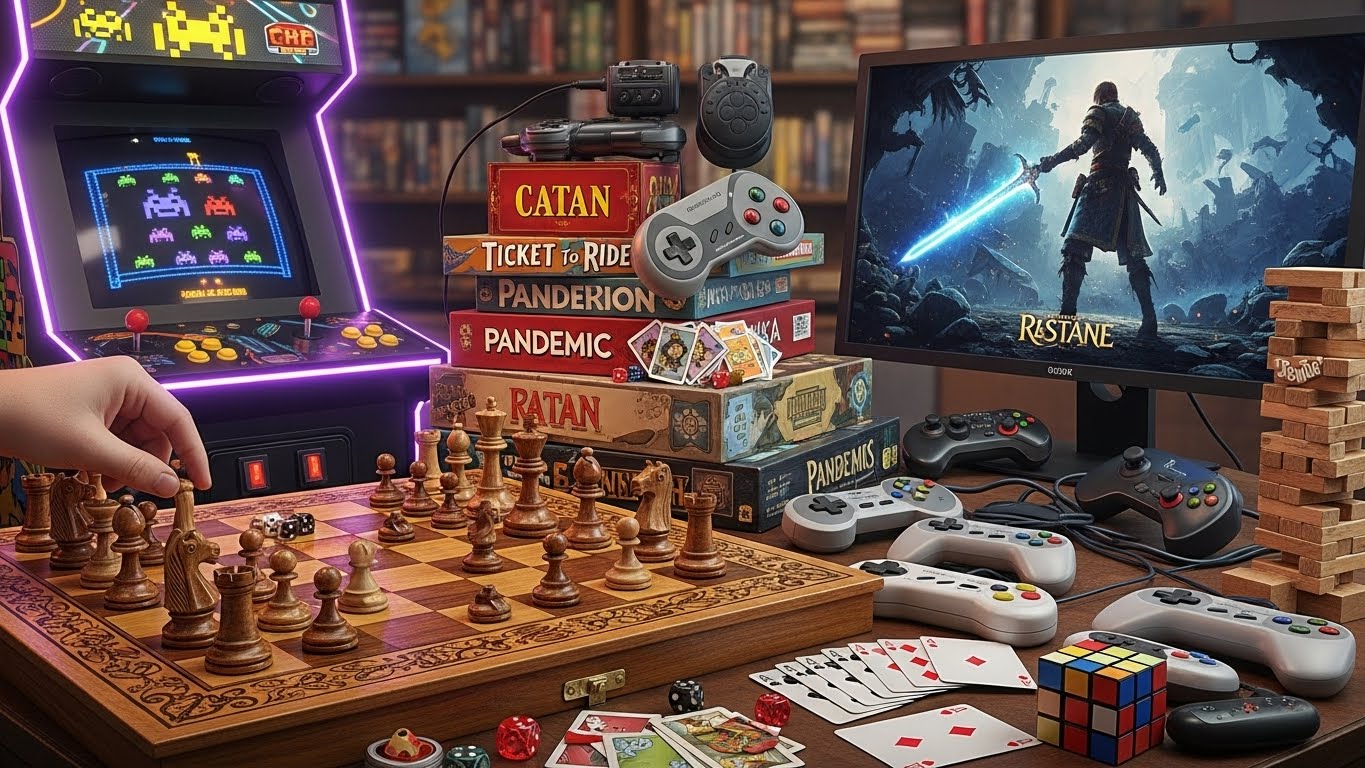
As societies grew, games became more structured. The rise of board and tabletop games reflected social and intellectual development. Chess, invented around the 6th century, became a symbol of strategy, intellect, and even politics. Every piece represented a class in society—from the king to the humble pawn.
Later came games like backgammon, checkers, mahjong, and dominoes. These games didn’t just entertain—they connected people across generations and regions. Families would gather around tables for hours, trading moves, laughter, and sometimes arguments.
In the 20th century, board games reached a new height. Monopoly, Scrabble, and Risk turned living rooms into miniature worlds of economy, words, and war. The tactile feel of moving pieces across a board, rolling dice, and competing face-to-face created moments that digital screens can never fully replicate.
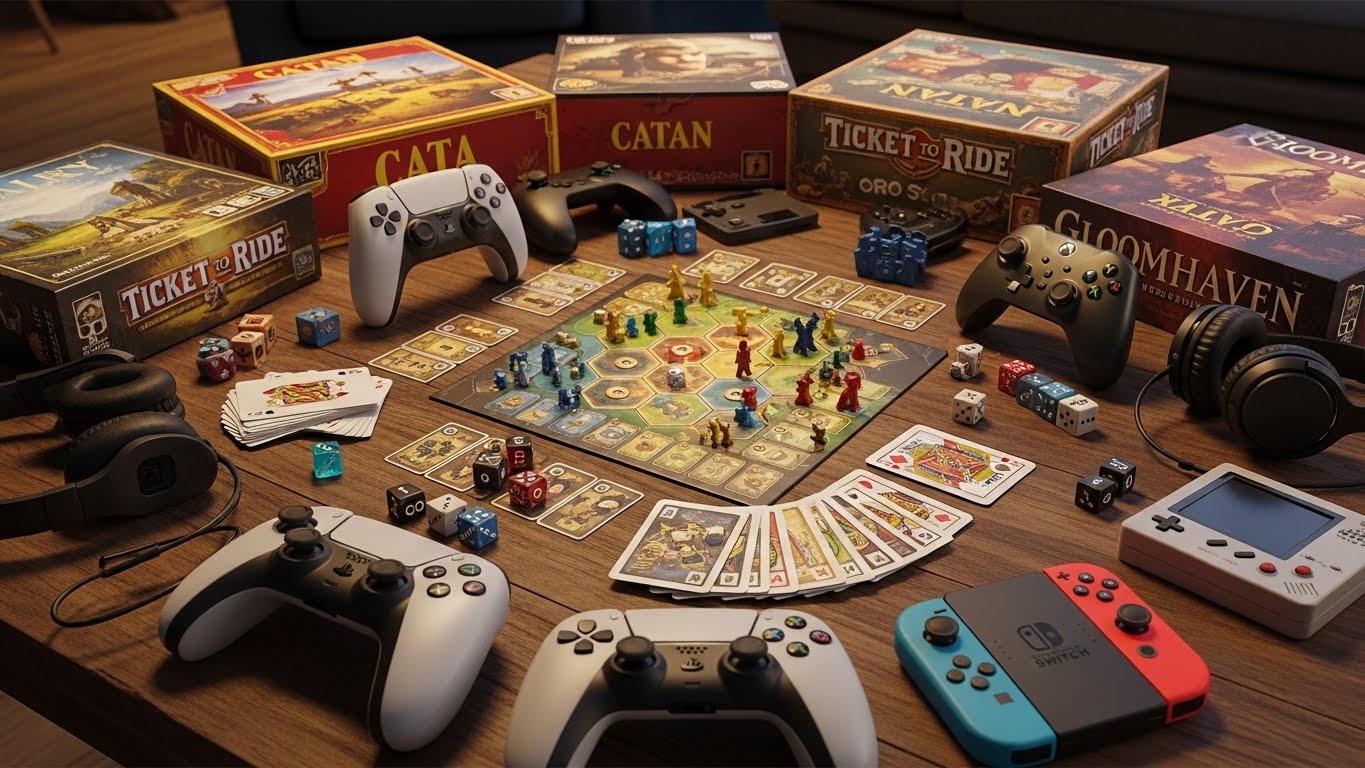
Today, board games have experienced a renaissance. Modern titles like Catan and Carcassonne have brought strategy and creativity back to family nights. Communities of board game enthusiasts continue to grow, showing that even in the digital age, the appeal of analog play remains strong.
The Digital Revolution: Birth of Video Games
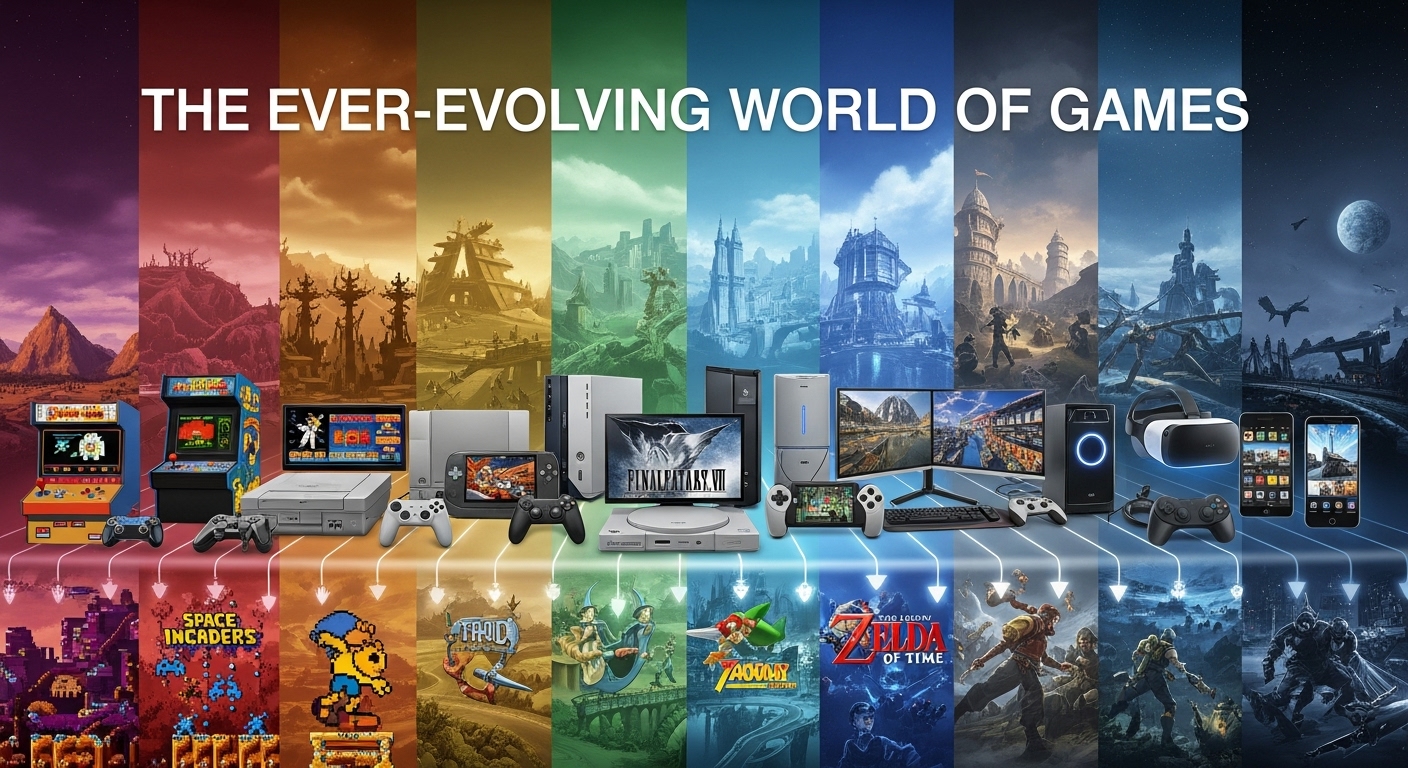
When computers arrived, they didn’t just change work and communication—they transformed play. The first digital games were simple experiments: Pong, Spacewar!, and Tetris. But those early pixels carried the seeds of an industry that would become larger than film and music combined.
The 1970s and 1980s saw the rise of arcade gaming. Kids crowded around glowing machines, feeding coins into Pac-Man and Donkey Kong. The arcade became a social hub where high scores were badges of honor. Soon after, home consoles like the Atari 2600 and Nintendo Entertainment System brought the arcade experience into living rooms.
Games like Super Mario Bros., The Legend of Zelda, and Sonic the Hedgehog became cultural icons. They weren’t just games—they were stories, worlds, and experiences that defined childhoods.
The leap from 2D to 3D in the 1990s was another milestone. Titles like Doom, Tomb Raider, and Final Fantasy VII expanded what games could be. They introduced narrative depth, immersive graphics, and emotional storytelling.
By the early 2000s, gaming had become mainstream. The rise of PlayStation, Xbox, and PC gaming brought cinematic experiences to millions. What began as simple lines on a screen evolved into vast, lifelike universes that blurred the line between film and play.
The Psychology of Play: Why We Love Games
Why do humans love games so much? The answer lies deep in psychology. Games satisfy core human needs—achievement, social connection, and curiosity. They give us challenges to conquer, goals to pursue, and feedback for our actions.
Winning a match or completing a quest triggers the brain’s reward system, releasing dopamine—the “feel good” chemical. But games aren’t just about victory. Even failure in games is designed to be motivating. The chance to try again, improve, and finally overcome a challenge is part of the joy.
Games also offer control in a chaotic world. In life, many factors are unpredictable, but in a game, the rules are clear. You know the goals, the obstacles, and the tools at your disposal. That sense of structure can be comforting.
Moreover, games allow safe exploration of emotions. Fear in a horror game, pride in victory, sadness in a story-driven adventure—these emotional journeys are experienced safely, yet deeply.
The Social Side of Gaming
Gone are the days when gaming was a solitary hobby. Today, it’s a social experience shared by billions. Online multiplayer games connect players across continents. A gamer in Pakistan can team up with someone in Japan or the United States within seconds.
Games like Fortnite, Minecraft, and Among Us are not just about competition—they are platforms for creativity and connection. Players chat, collaborate, and build friendships that sometimes last years.
Even single-player games foster community through discussions, fan art, and shared experiences. The excitement of discovering a hidden secret or mastering a level becomes richer when shared.
Esports, or competitive gaming, has turned play into a professional sport. Players train, compete in tournaments, and earn sponsorships. The best gamers are now celebrities, drawing stadium crowds and millions of viewers online.
Gaming is no longer a niche pastime—it’s a global social fabric.
Storytelling in Games: A New Art Form
Games have evolved into one of the most powerful storytelling mediums of our time. Unlike films or books, games let players live the story. Choices matter. Outcomes change based on decisions. That interactivity gives games an emotional depth no other medium can fully replicate.
Titles like The Last of Us, Red Dead Redemption, and Life is Strange have proven that games can make us cry, reflect, and connect on a human level. The characters feel real because we control their fates.
Game writers and designers have become modern storytellers. Through dialogue, music, and gameplay, they craft emotional journeys that stay with players long after the screen goes dark.
The Role of Technology in Shaping Games
Every leap in technology has changed how we play. The jump from pixels to polygons made worlds more realistic. High-speed internet made multiplayer seamless. Virtual reality now immerses players completely, letting them be inside the game.
Artificial intelligence has also changed gaming. NPCs (non-player characters) can now react intelligently, making gameplay unpredictable and lifelike. Game engines like Unreal and Unity allow developers to build worlds of stunning realism.
Mobile technology made gaming truly global. With a smartphone, anyone can play anywhere. This accessibility has brought millions of new players into the fold, from children playing puzzle games to adults exploring strategy titles during commutes.
Cloud gaming is the next frontier—no consoles, no downloads, just instant access to massive games streamed through the internet. The future of gaming is one of instant play, shared experiences, and limitless worlds.
The Business of Games: From Hobby to Industry
What started as small projects by passionate programmers is now a multi-billion-dollar global industry. Major game studios rival Hollywood in budgets and reach. But indie developers, too, are thriving—creating innovative, heartfelt experiences outside the corporate mold.
Games are no longer one-time purchases. Many are “live services,” evolving over time with new content, updates, and communities. Players invest not just money but time, identity, and emotion into these worlds.
Merchandise, films, and even theme parks expand gaming beyond screens. Franchises like Pokémon, Halo, and Assassin’s Creed have become multimedia empires.
Gaming is not just entertainment—it’s an economy, an ecosystem, and a culture that drives technology and art forward.
The Cultural Impact of Games
Games influence how we see the world. They inspire art, music, fashion, and even education. Schools now use gamified learning to make classes more engaging. Therapists use games to help with anxiety, coordination, and cognitive development.
Culturally, gaming has become a unifying language. Memes, references, and shared gaming experiences cross borders. A line from a game or a familiar sound effect can evoke instant nostalgia among millions.
Even storytelling in other media has evolved because of games. Interactive movies and choose-your-own-adventure series draw directly from gaming principles. The idea of the audience participating rather than just watching is now a mainstream concept.
The Dark Side of Gaming
Like any form of entertainment, gaming has its challenges. Addiction, toxicity, and over-commercialization can cast shadows over its bright potential. Some players struggle with excessive screen time, while others face harassment in online communities.
The industry also grapples with issues like crunch—long working hours for developers—and representation, where diversity and inclusion are still developing.
However, awareness is growing. Organizations, developers, and communities are addressing these problems. Efforts to make gaming more inclusive, balanced, and healthy continue to evolve.
Games can be powerful tools for empathy, but they must also be responsibly designed and consumed.
The Future of Gaming: Beyond the Screen
What does the future hold for games? The answer lies in imagination. Virtual and augmented reality are merging the real and digital worlds. Imagine standing in your living room, swinging a sword in a fantasy realm, or collaborating on a digital canvas with friends across the world.
Artificial intelligence could personalize every game experience. Worlds that adapt to your play style, characters that remember past interactions, and stories that evolve uniquely for each player are becoming possible.
As technology advances, the line between player and creator will blur. Players will build their own worlds, stories, and mechanics—collaborating directly with AI-driven tools.
One day, gaming may go beyond entertainment entirely, becoming a way of living, learning, and creating.
The Power of Games to Unite
Ultimately, games remind us of what it means to be human. They challenge us, connect us, and let us dream beyond our limits. Whether we play to compete, escape, or create, games are an expression of imagination without boundaries.
Across every culture and generation, play remains constant. The rules may change, the tools may evolve, but the spirit of the game—the thrill of discovery, the joy of victory, and the beauty of connection—endures.
The story of games is the story of us. As long as there are people, there will be play.
Conclusion: The Infinite Game
Games have come a long way—from carved stones and wooden boards to digital galaxies and virtual realities. They have grown with humanity, reflecting our creativity, our challenges, and our endless curiosity.
In every era, games teach us something new—about strategy, patience, teamwork, and imagination. They are both mirror and window: a reflection of our past and a glimpse of our future.
Whether you are rolling dice, swinging a controller, or exploring a digital world, you are part of something ancient and ever-evolving.
The world of games is infinite. And the next great adventure is only one play away.