
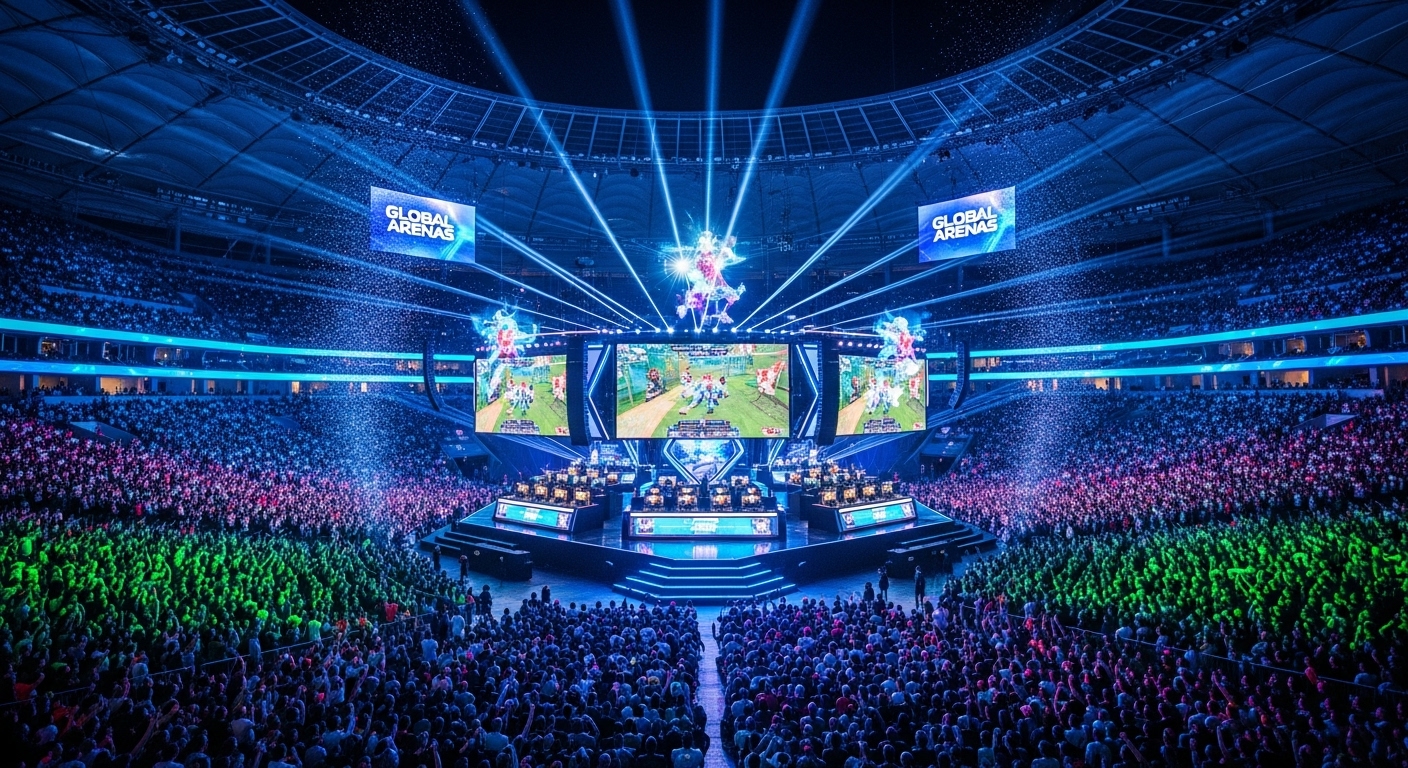
A decade ago, the idea of thousands of fans packing into an arena to watch people play video games might’ve seemed far-fetched. Fast-forward to today, and esports tournaments are filling stadiums across continents, rivaling traditional sports in attendance, energy, and spectacle. From Seoul to Stockholm, and Los Angeles to Riyadh, the rise of esports has turned once-niche gaming events into global entertainment phenomena.
The Rise of Competitive Gaming
The roots of esports stretch back to LAN parties and small online competitions, but it wasn’t until streaming platforms and professional leagues gained traction that competitive gaming exploded. Titles like League of Legends, Dota 2, Counter-Strike: Global Offensive, and Valorant are now central attractions in international tournaments that draw millions of viewers online—and tens of thousands in person.
What sets esports apart is its digital-native foundation. Unlike traditional sports, which adapted to digital spaces, esports were born there. As gaming’s popularity surged globally, so did its competitive scene. What began in internet cafes and basements is now taking center stage at iconic venues like Madison Square Garden and the Mercedes-Benz Arena in Berlin.
Stadiums as Digital Colosseums
Esports events today are more than just matches—they’re full-fledged productions. Giant LED screens, booming sound systems, light shows, and live commentary transform these tournaments into immersive experiences. The energy is electric. Fans chant their favorite teams’ names, wave flags, and wear jerseys, just like at a football match.
Take The International, Dota 2’s premier annual tournament, which not only features multimillion-dollar prize pools but regularly sells out major arenas. Riot Games’ League of Legends World Championship rotates host cities globally and consistently draws sell-out crowds. In 2024, the grand finals in Seoul were watched live by over 50,000 fans in the stadium and over 100 million online.
Global Appeal and Cultural Impact
One of the driving forces behind esports’ stadium-filling power is its global accessibility. Players and fans come from every region, speaking dozens of languages but united by a shared digital culture. A player from Denmark can compete with someone from Brazil, broadcast to a worldwide audience with real-time translation and engagement.
This global appeal has reshaped how people view professional competition. In countries like South Korea and China, esports stars are treated like celebrities, complete with brand endorsements, fan clubs, and massive media coverage. Even in the West, universities are offering esports scholarships, and governments are starting to regulate and support the industry like traditional sports.
The Business of Esports Spectacle
There’s also serious money involved. Sponsorships, ticket sales, merchandise, and streaming rights generate significant revenue for organizers and teams. Brands from Red Bull to Louis Vuitton are investing heavily in esports, recognizing the potential of a young, passionate, and tech-savvy audience.
Events are now orchestrated with precision—team reveals, storylines, rivalries, and player interviews are strategically deployed to keep fans engaged. This fusion of sport, entertainment, and technology is why so many major arenas now include esports in their event calendars alongside music concerts and basketball games.
Looking Ahead
As infrastructure, investment, and fan interest continue to grow, esports is poised to become a permanent fixture in the world’s biggest stadiums. With the line between virtual and physical blurring, and with innovations like VR viewing and mixed-reality gameplay on the horizon, the future of esports as a live spectacle looks brighter than ever.
In short, esports is no longer a sideshow—it’s the main event. And the roar of tens of thousands in a packed arena proves that competitive gaming has truly arrived on the global stage.