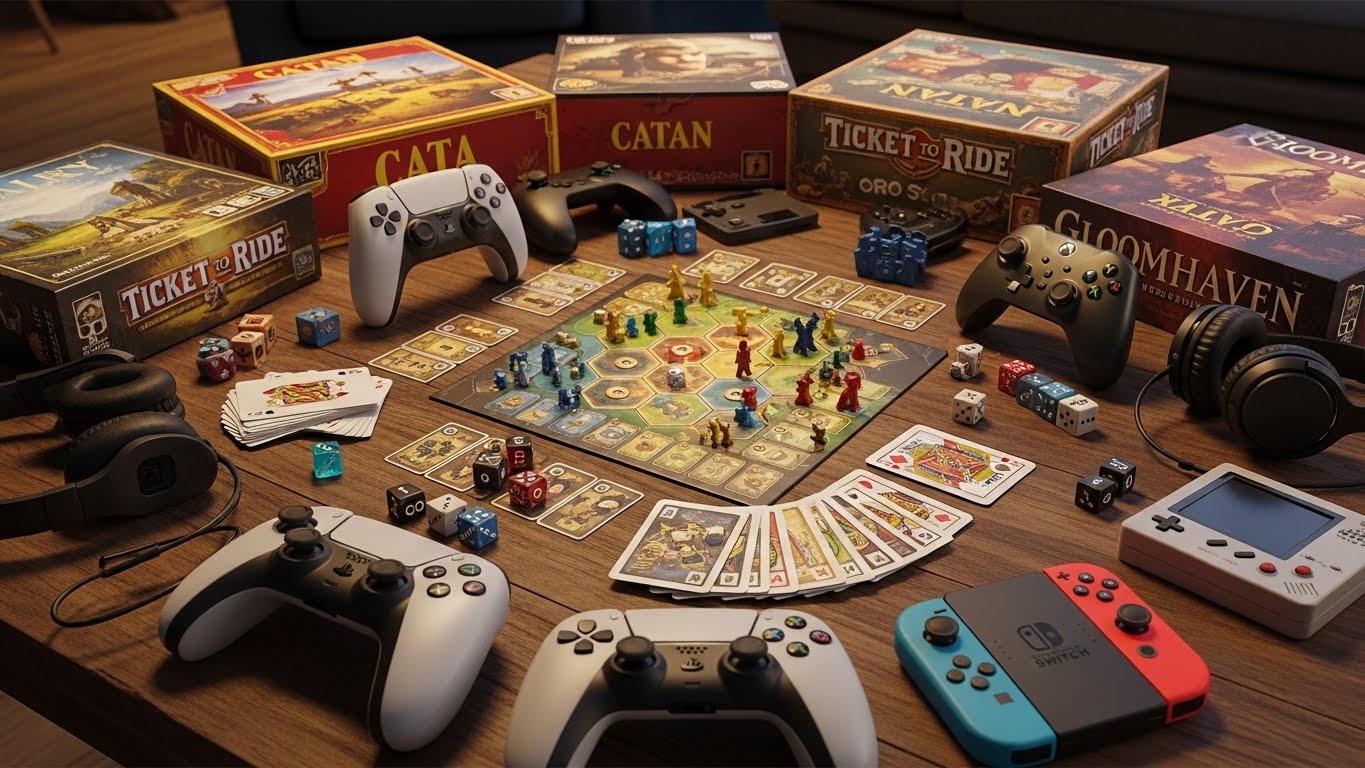
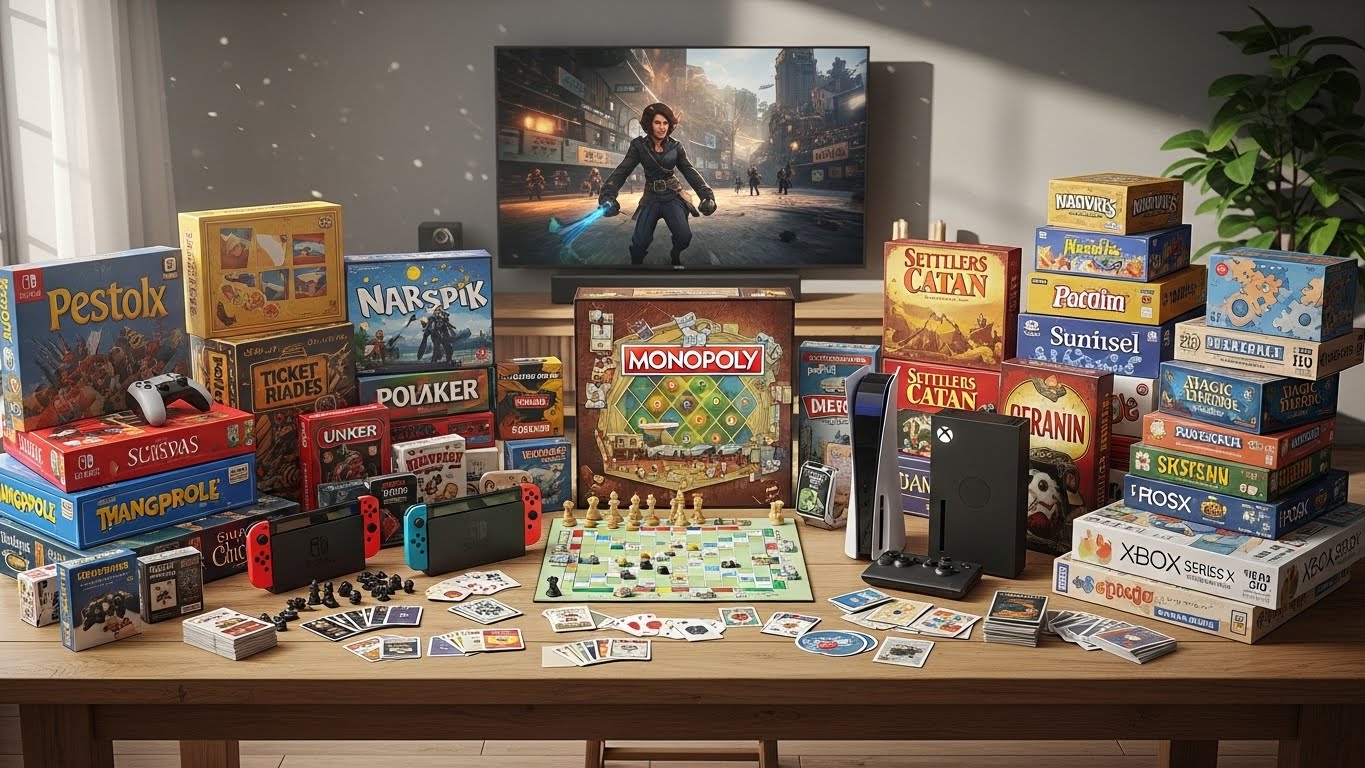
The world of games has evolved far beyond what anyone could have imagined decades ago. Once confined to arcade machines and simple consoles, games have now become a dominant form of entertainment, cultural influence, and even a tool for learning and socialization. The gaming industry has grown into a multi-billion-dollar global phenomenon, capturing the interest of millions of people across the world. Games are no longer just a pastime—they are immersive experiences that combine storytelling, technology, and creativity to create an interactive universe where players can explore, compete, and even shape their own worlds.
In this blog post, we will dive into the history of gaming, explore different types of games, discuss their impact on culture and society, and examine the innovations shaping the future of interactive entertainment.
The Evolution of Gaming: From Simple Beginnings to Immersive Experiences
Early Beginnings of Video Games
The story of video games begins in the 1970s with simple, pixelated titles that were easy to play but incredibly captivating. Games like Pong and Space Invaders introduced the concept of digital entertainment to a generation that had never experienced anything like it. These games relied on simple mechanics, such as moving a paddle to hit a ball or shooting aliens descending from the top of the screen. Despite their simplicity, they captured the imagination of players and laid the foundation for the gaming industry.
The 1980s saw the rise of arcade culture, with neon-lit rooms filled with gaming machines attracting young people and adults alike. Iconic games like Pac-Man, Donkey Kong, and Galaga became household names, creating a new form of social entertainment where players competed for high scores and recognition.
The Rise of Home Consoles and PC Gaming
By the mid-1980s and 1990s, home consoles such as the Nintendo Entertainment System and Sega Genesis brought gaming directly into living rooms. These systems allowed players to enjoy complex games with engaging storylines, colorful graphics, and increasingly intricate mechanics. Classic titles like Super Mario Bros., The Legend of Zelda, and Sonic the Hedgehog became cultural icons, shaping a generation of gamers.
PC gaming also grew in popularity during this period, offering players the ability to experience complex simulations, strategy games, and early online multiplayer interactions. Titles such as Doom, Warcraft, and The Sims demonstrated the potential of personal computers as gaming platforms and laid the groundwork for online gaming communities.
3D Graphics and Virtual Reality: The New Frontier
The late 1990s and early 2000s marked the introduction of 3D graphics, allowing game worlds to become more immersive and visually realistic. Games like Final Fantasy VII, Super Mario 64, and The Legend of Zelda: Ocarina of Time brought players into expansive worlds that could be explored in three dimensions, creating a sense of presence and engagement previously unavailable.
In the 2010s, virtual reality emerged as the next evolution of gaming. VR headsets like Oculus Rift and PlayStation VR allowed players to step inside game worlds, interact with environments, and experience a level of immersion that was once thought impossible. Virtual reality has opened the door for games to become fully interactive experiences, where players can physically move, manipulate objects, and participate in scenarios as if they were truly there.
Exploring Different Types of Games
Action Games
Action games are characterized by fast-paced gameplay, requiring quick reflexes, coordination, and strategic thinking. They include combat, platforming, and shooting mechanics, offering players intense experiences that are both challenging and rewarding. Iconic titles like God of War, Assassin’s Creed, and Call of Duty exemplify this genre, providing immersive worlds where players can explore, fight, and conquer challenges.
Action games often emphasize immediate feedback and constant engagement, which is why they remain some of the most popular and enduring games across platforms.
Role-Playing Games (RPGs)
Role-playing games allow players to assume the identity of a character within a rich, interactive world. RPGs focus on character development, narrative choices, and quest-based gameplay. Popular titles such as Skyrim, Final Fantasy, and The Witcher series allow players to explore vast worlds, make critical decisions, and shape the outcomes of complex storylines.
RPGs are known for their deep storytelling, often blending fantasy, science fiction, and real-world themes into narratives that challenge players intellectually and emotionally. Character customization, skill progression, and strategic decision-making make RPGs a genre that appeals to both casual and dedicated gamers.
Simulation Games
Simulation games recreate real-life activities or environments, allowing players to experience scenarios that may not be accessible in reality. From city-building games like SimCity and Cities: Skylines to farming simulations like Stardew Valley, these games offer players control over a virtual ecosystem, challenging them to manage resources, make strategic decisions, and achieve goals.
Simulation games provide both entertainment and educational value. Flight simulators, driving simulations, and medical training games offer realistic experiences that enhance skill development and problem-solving abilities.
Strategy Games
Strategy games demand careful planning, critical thinking, and foresight. Players must manage resources, position units, and anticipate opponents’ moves to achieve success. Strategy games come in two primary forms: real-time strategy, such as Starcraft and Age of Empires, and turn-based strategy, like Civilization and XCOM.
The appeal of strategy games lies in their complexity and the satisfaction of executing well-thought-out plans. They foster analytical thinking and decision-making skills while offering highly engaging gameplay for players who enjoy challenges beyond simple reflex-based actions.
Sports and Racing Games
Sports and racing games simulate physical activities, allowing players to engage in football, basketball, racing, or other competitive events digitally. Titles like FIFA, NBA 2K, Gran Turismo, and Forza Horizon provide realistic graphics, physics, and player behaviors, giving an authentic experience for fans of various sports.
These games often include multiplayer modes and career simulations, allowing players to manage teams, compete in tournaments, and track progress over time. The combination of realism, competition, and strategy has made sports and racing games highly popular worldwide.
Puzzle and Adventure Games
Puzzle games challenge players to solve problems using logic, pattern recognition, and critical thinking. Games like Tetris, Portal, and Candy Crush are examples of titles that engage players’ minds while providing entertainment. Puzzle games can be relaxing, competitive, or even educational, appealing to a wide audience.
Adventure games combine narrative-driven exploration with problem-solving. Iconic series like Uncharted, Monkey Island, and Tomb Raider offer immersive stories, engaging puzzles, and exploration, blending action and narrative into one captivating experience.
The Impact of Games on Society and Culture
Social Interaction and Community
Games have become a vital medium for social interaction. Multiplayer games like World of Warcraft, Fortnite, and League of Legends allow players to connect globally, forming friendships, alliances, and competitive rivalries. Online gaming has evolved into a social platform where players interact, collaborate, and communicate while engaging in immersive gameplay.
Communities built around games have become influential cultural hubs. Streaming platforms and gaming forums allow players to share strategies, showcase skills, and even develop careers as professional gamers or content creators. Gaming has shifted from a solitary hobby to a communal and interactive experience.
Gaming as a Storytelling Medium
Video games offer a unique form of storytelling where players actively participate in shaping the narrative. Unlike films or books, games allow players to influence outcomes, interact with characters, and explore branching storylines. Games like The Last of Us, Red Dead Redemption 2, and Mass Effect have demonstrated that games can deliver rich narratives, deep emotional engagement, and thought-provoking experiences.
This interactive form of storytelling has transformed how stories are told, making players active participants rather than passive observers. It allows for unique emotional connections and immersive experiences that few other media can achieve.
Educational and Cognitive Benefits
Beyond entertainment, games also provide educational and cognitive benefits. Simulation games, puzzle games, and strategy games enhance problem-solving skills, critical thinking, and spatial awareness. Educational titles like Minecraft have been used in classrooms to teach coding, engineering, and design principles in an engaging manner.
Serious games, designed for professional training, are increasingly being used in fields like medicine, aviation, and military training. These games simulate real-world scenarios, providing safe environments to practice skills and make decisions without real-world consequences.
The Future of Gaming
Virtual Reality and Augmented Reality
The future of gaming is likely to be defined by immersive technologies like virtual reality and augmented reality. VR games will continue to create fully interactive experiences, allowing players to physically interact with digital worlds. AR games will blend the virtual and real worlds, creating experiences where digital elements enhance reality.
These technologies will transform the way players engage with games, offering unprecedented levels of immersion and interaction.
Cloud Gaming and AI Integration
Cloud gaming is another innovation set to revolutionize the industry. By streaming games from powerful servers directly to devices, players can enjoy high-quality experiences without expensive hardware. This will make games more accessible to a wider audience, removing barriers to entry.
Artificial intelligence will further enhance gaming experiences. Smarter NPCs, adaptive difficulty, and personalized gameplay will make games more engaging and tailored to individual players. AI could also support creativity, generating dynamic game worlds that evolve in response to player actions.
The Rise of Competitive and Social Gaming
Competitive gaming, or eSports, will continue to expand, offering professional opportunities, global tournaments, and entertainment for millions of viewers. Social features, multiplayer collaboration, and community-building will also become more integral to game design, strengthening the communal aspect of gaming and making it a key part of modern culture.
Conclusion
The world of games has come a long way from simple pixelated screens to vast immersive worlds where players can explore, compete, and learn. Gaming has become a powerful cultural force, blending entertainment, storytelling, social interaction, and education into a single interactive medium. With technological advancements such as virtual reality, augmented reality, artificial intelligence, and cloud gaming, the future promises experiences that are more immersive, interactive, and personalized than ever before.
Whether it’s action, role-playing, simulation, strategy, sports, or puzzle games, there is something for everyone in the world of gaming. It has evolved into more than a pastime; it is a way of life, a creative outlet, and a platform for social and intellectual engagement. The gaming industry continues to innovate, inspire, and entertain, and its influence on society will only grow in the coming years. The only limit is imagination, and the world of games offers endless possibilities for those willing to dive in.