
Introduction
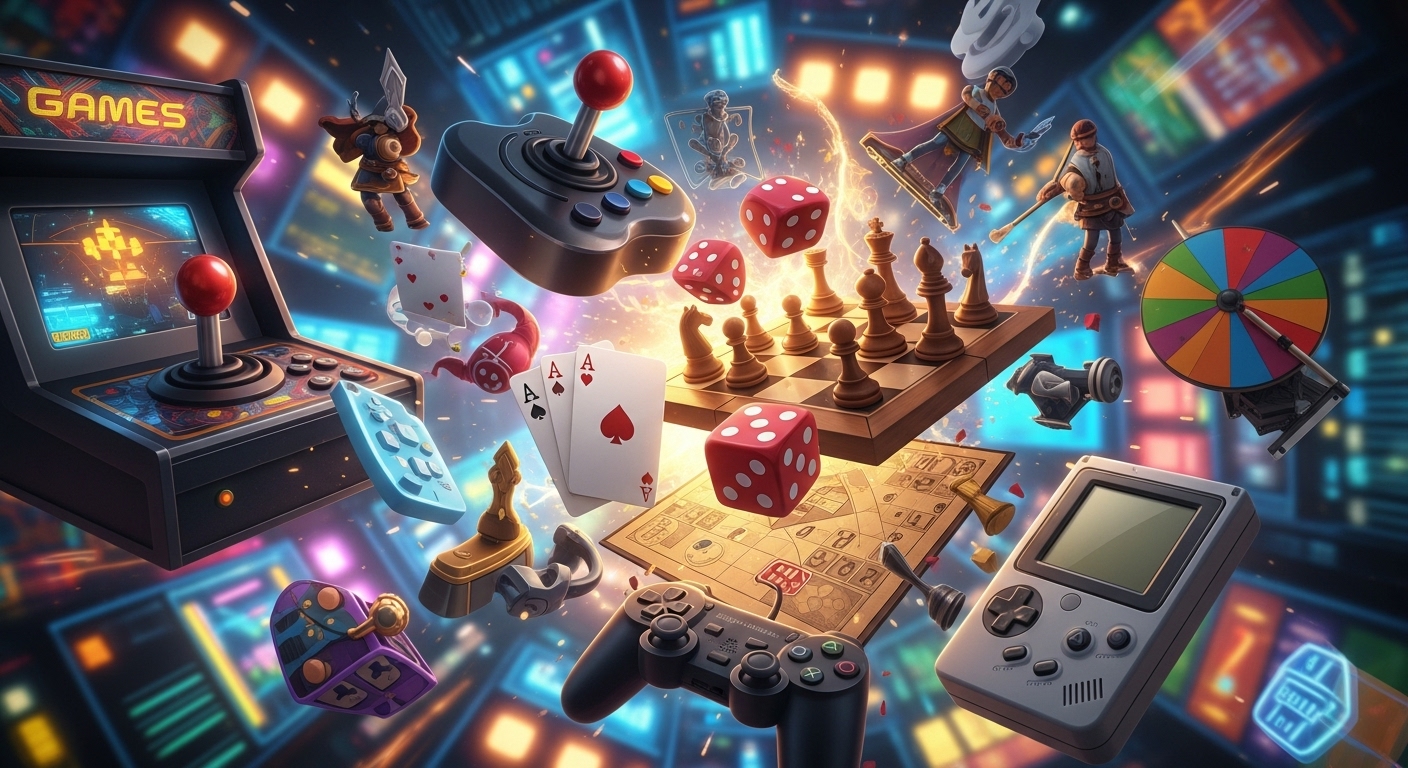
Games have been an integral part of human culture for millennia, evolving alongside us, adapting to new technologies, and reflecting our society’s ever-changing needs. Whether played for leisure, competition, education, or even as a form of socialization, games have always offered an escape, a challenge, and an opportunity for growth. Today, games exist in a multitude of formats, from traditional board games to cutting-edge video games that immerse players in fantastical worlds. The enduring appeal of games can be attributed to their universal ability to entertain, engage, and bring people together.
This blog post takes a deep dive into the evolution of games, exploring how they have changed over time, their cultural significance, the role of technology in their development, and the future of gaming in our increasingly digital world.
The Origins of Games
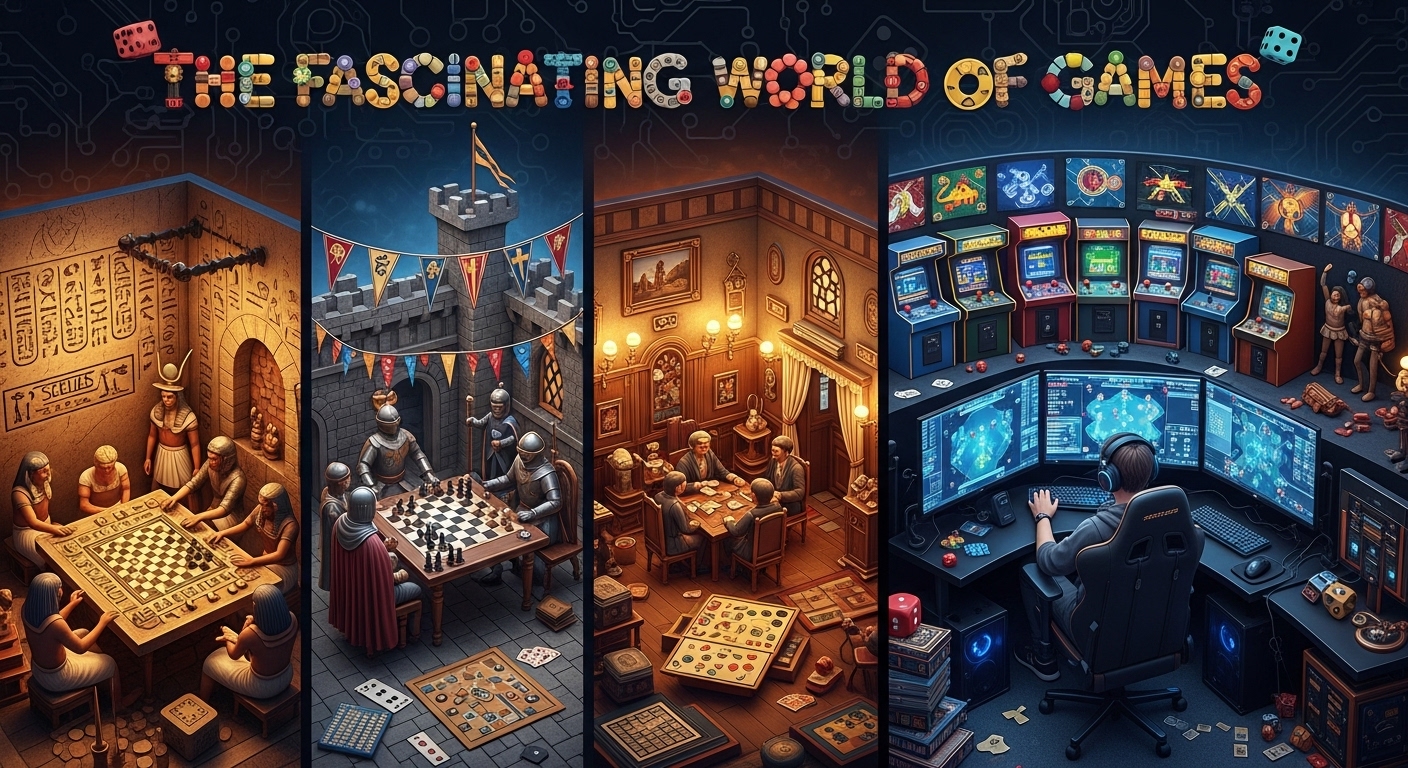
The history of games stretches back to the earliest civilizations, with archaeological evidence showing that games have been played since antiquity. The ancient Egyptians, for instance, are known to have played a game called Senet, which dates back to around 3100 BCE. This game, like many others from that era, was often used not just for entertainment, but also for ritualistic or spiritual purposes.
Similarly, the ancient Greeks played games such as dice and various board games, while the Romans were known for their gladiatorial contests and early forms of sporting events. Games were often seen as a way to test skill, wit, and strength, and these early forms of play laid the foundation for modern competition.
As centuries passed, games continued to evolve, with the development of card games in China during the Tang Dynasty (618–907 AD) and the creation of chess in India around the 6th century AD. These games spread across continents and evolved into the games we recognize today.
The Golden Age of Board Games
As society became more structured and complex, so did the games we played. Board games, in particular, became a major form of entertainment in many cultures. Chess, which originated in India, spread to the Middle East and Europe, eventually becoming a symbol of intellectual prowess. Games like Go, backgammon, and checkers also found their place in the annals of history, each offering unique challenges and strategies.
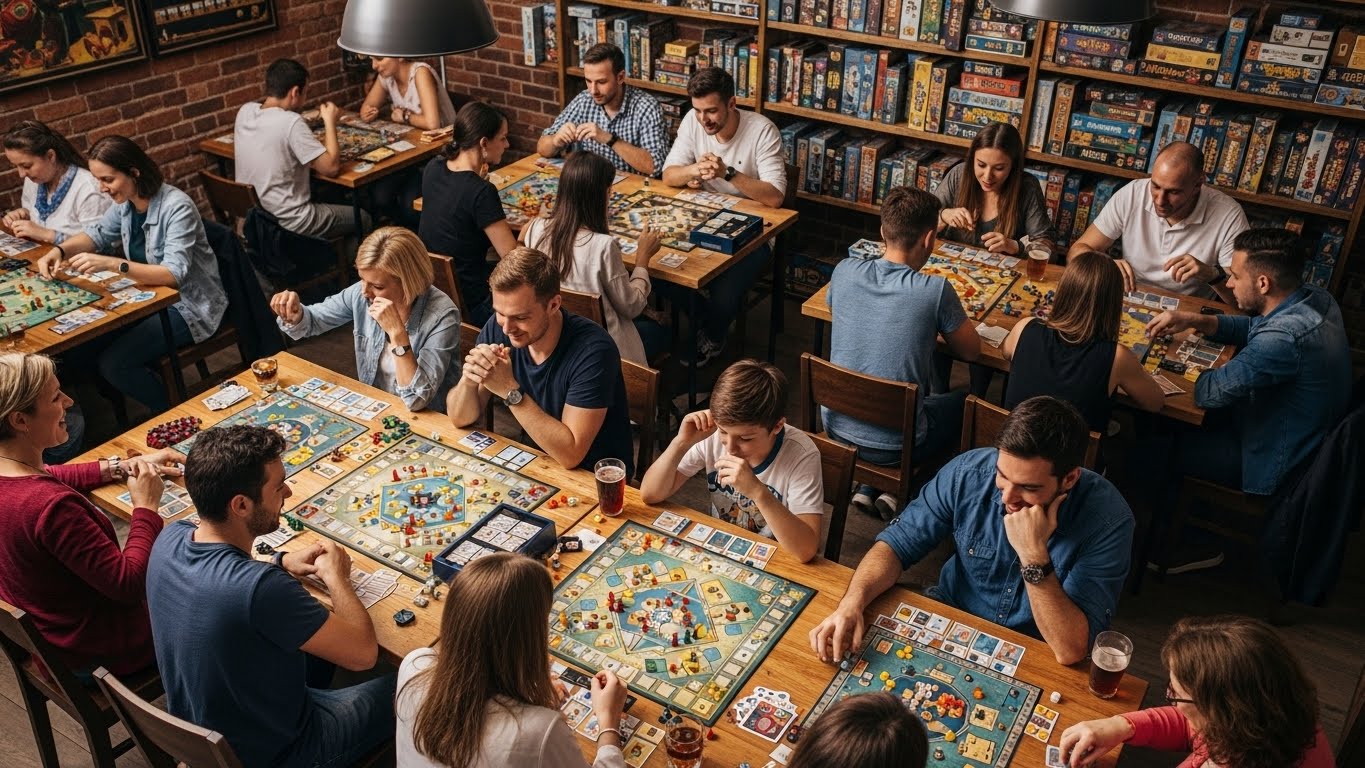
During the 19th century, with the industrial revolution and increasing access to leisure time, board games became even more widespread. Classic games like Monopoly, Scrabble, and Risk became household names, with families gathering around tables to play, socialize, and compete. These games provided more than just entertainment; they also taught strategic thinking, teamwork, and resource management.
In the 20th century, the advent of mass production and improved printing techniques made board games more affordable and accessible to people from all walks of life. This era marked the golden age of board games, with countless new games being developed for different age groups and interests.
The Rise of Video Games
In the mid-20th century, the digital revolution gave birth to a new era of gaming: video games. The early days of video gaming were humble, with simple games like Pong, created in 1972 by Atari, being the first to capture the imagination of the public. These early games were basic in terms of graphics and gameplay but offered something entirely new—a virtual environment where players could control characters or objects and interact with the screen in real-time.
The 1980s saw the rise of arcade gaming, with games like Pac-Man, Donkey Kong, and Space Invaders becoming instant classics. These games were accessible to everyone and offered both casual play and intense competition. The video game industry boomed, with gaming consoles such as the Nintendo Entertainment System (NES) and Sega Genesis bringing the arcade experience into homes across the globe.
The 1990s marked a shift toward more complex, story-driven video games, with the release of titles like Super Mario 64 and The Legend of Zelda: Ocarina of Time. These games not only pushed the boundaries of graphics and technology but also introduced immersive narratives and world-building elements, making players feel as though they were part of the game’s world.
The Evolution of Online Gaming
The turn of the 21st century saw the next major leap in gaming with the introduction of online multiplayer games. As the internet became more accessible, games like World of Warcraft, Counter-Strike, and Halo allowed players to connect with others around the world in real-time. This marked the beginning of a new era where gaming was not only a solitary experience but also a social one.
Online gaming brought with it the rise of eSports, a competitive gaming phenomenon that has since become a global industry. Players and teams compete in tournaments for substantial cash prizes, sponsorships, and recognition, turning professional gaming into a legitimate career for many. The streaming platforms Twitch and YouTube have also played a major role in the rise of eSports, offering a space for gamers to share their gameplay experiences, provide commentary, and interact with fans in real-time.
The social aspect of online gaming continues to grow, with games like Fortnite, PUBG, and Apex Legends attracting millions of players who form communities, participate in challenges, and engage in virtual battles. This shift has also paved the way for the development of gaming-related content, such as live streams, podcasts, and influencer marketing, further solidifying gaming as a significant part of modern culture.
The Role of Technology in Modern Games
Technology is at the heart of the gaming revolution. As hardware and software have improved, so too have the possibilities for what games can achieve. The development of advanced graphics, artificial intelligence (AI), and virtual reality (VR) has led to a more immersive gaming experience.
High-definition graphics and photorealistic environments now allow players to explore richly detailed worlds with breathtaking realism. AI has enabled non-playable characters (NPCs) to react to player choices and behaviors, making games feel more dynamic and responsive. Virtual and augmented reality have pushed the boundaries even further, offering gamers the chance to step inside a virtual world and interact with it as though they were actually there.
Cloud gaming is another technological advancement that has opened up new opportunities for players. With the ability to stream games directly from remote servers, players no longer need to rely on high-end consoles or PCs to play demanding titles. This has made gaming more accessible, with users able to play high-quality games on their smartphones, tablets, or low-spec devices.
The Cultural Impact of Games
Games, whether digital or physical, have always been more than just a source of entertainment. They have played a vital role in shaping culture, reflecting societal values, and providing a means of social interaction. For many, games are a way to bond with friends and family, as well as a way to forge new connections with people around the world.
The cultural influence of video games has been profound. Games like Super Mario, The Legend of Zelda, and Pokémon have become iconic symbols, with their characters and stories ingrained in popular culture. The art of game design has also contributed to visual storytelling, with video games now being recognized as a legitimate form of art. Game soundtracks, narratives, and world-building techniques are studied in the same way as those in film or literature.
Gaming communities have also become social hubs where people share experiences, collaborate, and celebrate their passion for gaming. Whether through online multiplayer platforms or fan conventions like E3 and PAX, games bring people together, creating lasting friendships and fostering a sense of belonging.
The Future of Gaming
As technology continues to advance, the future of gaming is filled with exciting possibilities. The growth of augmented reality and virtual reality could lead to fully immersive gaming experiences where players are physically present in the game world. The development of AI will likely result in even more realistic and responsive game environments, where every action taken by the player has a meaningful consequence.
Games will continue to evolve, with increasing focus on inclusivity, accessibility, and diverse narratives. The rise of indie games, fueled by crowdfunding platforms and digital distribution, has already proven that small teams can create groundbreaking experiences. The future of gaming will be marked by innovation, creativity, and a broadening of the scope of what games can achieve.
Moreover, the ongoing growth of mobile gaming, cloud gaming, and cross-platform play will make games more accessible than ever before, ensuring that players can enjoy their favorite titles from virtually anywhere, on any device.
Conclusion
From ancient board games to the sprawling digital universes of today, games have always been an integral part of human culture. They entertain, challenge, and connect us in ways few other activities can. As technology continues to advance and the gaming industry grows, the future holds limitless potential for innovation and creativity. Whether you’re a casual player or a dedicated gamer, the world of games is a fascinating and ever-evolving realm, rich with possibilities for entertainment, exploration, and personal growth.
Games are more than just fun—they are an essential part of our shared human experience, shaping culture, fostering connections, and providing a window into worlds both real and imagined.